AC Repair in Manor TX: Common Thermostat Problems and Fixes
Thermostats are small, cheap-looking devices that control one of the most expensive systems in your home. Spend a little time with the wrong thermostat and you will see higher bills, uneven cooling, and a lot of arguing over who set the temperature. In Manor TX, where summer temperatures regularly climb into the 90s and humidity can feel relentless, a malfunctioning thermostat is not a minor inconvenience. It is a reliability and comfort problem you can often diagnose without calling a truck, and sometimes you should call a pro right away. Here I’ll walk through the most common thermostat problems I see when doing AC repair in Manor TX, how to troubleshoot them safely, and when ATX Heating & Air Conditioning or a similarly certified technician should handle the job.
Why thermostats matter beyond the control panel A thermostat is more than a dial or touch screen. It is the sensor, the communications hub, and the decision-making layer between your living space and the air handler outside. When it works, you barely notice it. When it fails, the air conditioner may run constantly, short cycle, refuse to start, or deliver air that feels 10 to 15 degrees off. In practical terms, that can translate to 10 to 30 percent higher energy use during a hot month, and more wear on the compressor. I have seen simple fixes save homeowners dozens of dollars a month and prevent premature system failures.
Common thermostat problems and what they actually mean Faulty readouts, blank displays, and unresponsive buttons show up often, but they originate from different causes. Below are the recurring failure modes I encounter in Manor TX service calls, with realistic explanations you can use to narrow the root cause.
Incorrect temperature reading If the thermostat consistently reports a different temperature than the room actually feels, the internal sensor may be off or placed in a poor location. A thermostat mounted over a heat register, in direct sunlight through a window, or inside a cold hallway will misreport conditions. I once swapped a homeowner’s thermostat from a south-facing entryway to an interior wall near the living room and the house went from being over-cooled to comfortable within hours. The sensor itself can also drift with age or corrosion, producing errors of several degrees.
Short cycling and frequent on-off behavior Short cycling means the AC runs for brief periods then shuts down, then repeats the pattern. That behavior stresses the compressor. Thermostats cause this if they are set to a very tight deadband or have a faulty relay. Short cycling can also be the symptom of a communication problem between a smart thermostat and the air handler. I’ve seen wireless thermostats lose packets if the receiver behind the furnace has a weak antenna, resulting in intermittent operation. Short cycling can also be legitimate if the system is oversized, but the thermostat often reveals the trigger.
No response when you change settings If the thermostat won’t change fan or temperature settings, this is often a power or wiring issue. Many digital thermostats rely on a common wire, known as the C-wire, for continuous power. In older Manor homes the original thermostat wiring had only two or four conductors, and the C-wire was omitted. Replacing a battery-powered unit with a modern Wi-Fi model without adding a C-wire yields a host of intermittent power problems, including reboots, blank screens, or failure to communicate with the outdoor unit.
Blank or frozen display A blank screen can be dead batteries, a tripped breaker, or a failed transformer at the furnace. If the thermostat is model-specific to your heating and cooling system, the transformer that feeds the control circuit might be fried. Frozen displays on touch-screen units are often software related and can sometimes be fixed by a reset. The safer immediate step is to check batteries then the breaker box, before opening panels.
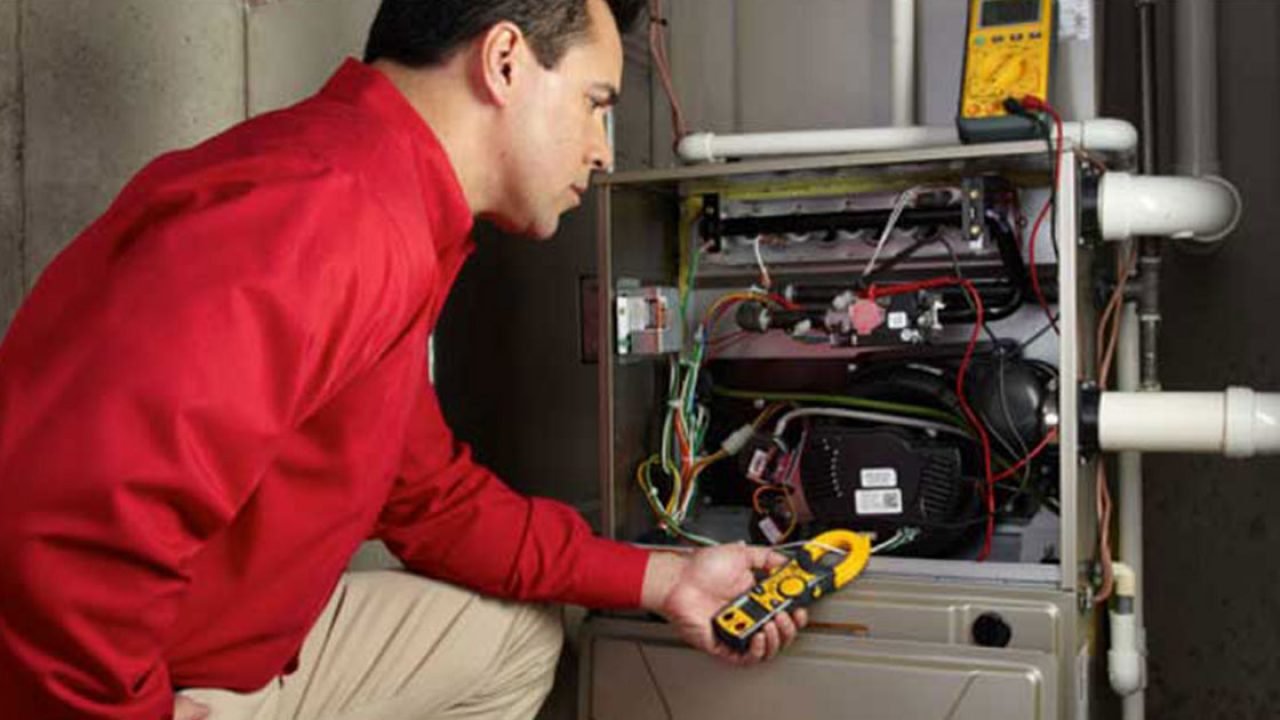
Thermostat won’t call for cooling but heat works This symptom signals wiring reversals, stuck relays, or misconfigured thermostat settings. Thermostats assign letters to wires such as Y for cooling, W for heat, G for fan, R for power. If cooling is not energized when commanded, the Y terminal may be loose, or the external relay it drives may have failed. When a thermostat calls for cooling and the outdoor unit does not run, the issue may be at the condenser contactor, not the thermostat at all. A multimeter can quickly determine whether the thermostat is sending 24 volts to the Y terminal when cooling is requested.
How to troubleshoot safely and effectively Most successful troubleshooting follows the same pattern: confirm the symptom, eliminate simple causes, and then test the control signal. Safety always comes first. Turn off power at the breaker before opening the furnace or air handler cabinet. When in doubt, call a professional.
Use this short checklist to cover the basics before you pick up the phone. Each step takes five minutes or less.
- Check the thermostat display and batteries, replace AA or AAA batteries if present, and confirm the screen wakes reliably.
- Confirm the thermostat settings: mode is set to cool, fan is set to auto or on as desired, setpoint is a few degrees below room temperature when testing.
- Inspect the thermostat mounting location. Look for direct sunlight, proximity to heat sources, or cramped closets that trap heat.
- Verify the breaker and the outdoor disconnect. Reset any tripped breakers and ensure the condenser disconnect switch near the outdoor unit is in the on position.
- If comfortable, remove thermostat cover and confirm wires are snug on labeled terminals, especially R, C, Y, and G. Take a photo before touching anything.
If the basic checks do not restore normal operation, a few more diagnostic steps will tell you whether the thermostat is at fault or the issue lies elsewhere in the system.
Testing whether the thermostat is sending the call A simple way to see if the thermostat is doing its job is to test for 24 volts across the control terminals when cooling is requested. With the thermostat in cool mode and the setpoint below room temperature, use a multimeter to measure voltage between R and Y. If you see about 24 volts, the thermostat is telling the outdoor unit to run. If the outdoor unit still does not start, the problem shifts to the contactor, capacitor, or the outdoor safety circuit. If there is no voltage, the thermostat or its power supply is the likely culprit.
Identifying a C-wire problem without pulling new wire Many Wi-Fi thermostats complain about missing C-wire during setup. You can confirm by removing the thermostat cover and checking for a blue or common-colored wire screwed into the C terminal. If no C-wire exists, options include using a plug-in C-wire adapter, installing a thermostat power extender kit sold by some manufacturers, or running one conductor from the furnace control board to the thermostat location. Running wire is the most reliable. If your home uses a heat pump, the wiring requirements are more complex and a technician should do the job.
When a thermostat is worth replacing Thermostats are inexpensive compared with a compressor or a total system replacement, but not every issue calls for replacement. Replace the thermostat when the display is dying, the internal relay is suspected of chattering, or when you need modern capability such as precise humidity control combined with networked scheduling. If you want to save energy through smart scheduling or zoning, a new programmable or smart thermostat makes sense. Choose models compatible with your system: conventional split systems, heat pumps, and multi-stage compressors require different wiring and control algorithms.
Smart thermostat pitfalls Smart thermostats bring schedules, remote control, and data. They also bring complications. If you live in a house with poor Wi-Fi in the mechanical room, a Wi-Fi thermostat that needs constant cloud access can be frustrating. Some smart thermostats assume they can control a heat pump with auxiliary heat and will switch to emergency heat incorrectly, raising energy use. During a recent service call in Manor, a homeowner replaced a mechanical thermostat with a smart model that had not been configured for a heat pump. The result was constant activation of electric strip heat until we reconfigured the wiring and settings. If you buy a smart thermostat, either ensure it supports your system type, or have ATX Heating & Air Conditioning wire and configure it properly.
When to call AC repair in Manor TX A thermostat troubleshooting attempt will tell you a lot, but there are clear situations where DIY stops and professional service begins. Below is a concise set of symptoms that usually require a trained technician.
- The outdoor unit does not respond even though the thermostat shows 24 volts between r and y, indicating potential contactor or capacitor failure.
- The blower runs intermittently or the furnace control board shows error codes, suggesting control board or relay issues.
- The thermostat needs a new c-wire installed and you prefer not to run new conductors through attic or walls.
- The system short cycles despite the thermostat sending consistent calls, which may be a sign of oversized equipment or refrigerant problems.
- The thermostat repeatedly loses power, indicating a faulty transformer or other control power issue.
Choosing the right contractor for thermostat and AC repair in Manor TX Not all HVAC companies are the same. Look for technicians who will diagnose rather than sell first. In my experience the better shops perform a sequence of checks, explain findings in plain language, and give a few options with costs. For instance, a failing contactor can be replaced on the spot for about $150 to $300 depending on access and parts. Replacing a thermostat and wiring a new C-wire might be $150 to $400. Replacing a compressor is a five-digit repair in many systems, so good diagnostics Emergency AC repair near me in Manor TX pay off.
ATX Heating & Air Conditioning is a local provider I have seen handle both routine thermostat swaps and complex wiring for smart systems. If you choose them or another provider, confirm they are licensed, insured, and able to provide references for similar jobs. Ask whether their technicians are NATE-certified or have manufacturer training on the equipment in your home. A technician who understands thermostats and control logic will reduce the chance of unnecessary parts changes.
Practical tips to prolong thermostat life and prevent problems Thermostats do not last forever, but you can extend useful life and avoid avoidable service calls with these habits. Keep the area around the thermostat clean, reduce direct sunlight by using drapes or shades, change batteries annually if your thermostat uses them, and keep Wi-Fi passwords and hub hardware in a reliable location if you use smart controls. During annual AC maintenance, have the technician verify thermostat calibration by comparing its reading to a known accurate thermometer placed nearby. A two degree drift is usually acceptable. If the drift is more, recalibration or replacement is warranted.
What to expect during a professional service call A focused service visit will include a verbal review of the symptom, a visual inspection of thermostat wiring, and testing of the 24-volt control outputs. The technician should test the outdoor unit response and measure amperage on the compressor motor if needed. If a thermostat replacement is performed, they should show you the wiring before disconnecting, and document any changes. Ask for a written estimate if additional parts or control board work are required. Good technicians leave the work area clean, label new thermostat wiring, and walk you through any new thermostat features so you do not misconfigure schedules or heat pump settings.
Real examples from the field One couple in Manor reported wildly fluctuating indoor temperatures through the summer. The indoor stat read 72 while a handheld thermometer showed 78. I discovered the thermostat was mounted directly over the hallway register and the homeowner had a lamp nearby. Moving the stat to an interior wall and adding a two degree offset fixed the comfort problem. Another case involved a newly installed smart thermostat that caused the outdoor unit to run but the indoor blower would not. The installer had swapped the G and Y terminals, which is an easy mistake to make when wires are unlabeled. Correct labeling and a brief functional test would have avoided a return trip.
Final case: emergency or not? If your system is running but the home remains uncomfortably warm, the urgency depends on health and usage. A single-room problem in an otherwise running house can usually wait a day. If you have infants, elderly occupants, or someone with a medical condition sensitive to heat, call for priority service. In extreme heat, compressor failures can be the difference between expensive emergency repair and a faster standard call. Planning ahead by scheduling AC maintenance in early spring will eliminate many thermostat surprises during the heat of summer.
Getting ahead of problems Thermostats are low-cost components in a high-cost system. Spending a little time on placement, power, and firmware compatibility will avoid repeated service trips. When you do need help, a local experienced contractor handling AC repair in Manor TX can diagnose the control signal, replace failing relays or contactors, and install properly wired smart thermostats so your system runs efficiently and reliably. If you want preventive service, ask about an annual AC maintenance plan that includes thermostat checks, coil cleaning, and refrigerant verification. Those visits reduce failures and often save more than their cost in avoided emergency repairs.
If you are dealing with erratic thermostat behavior right now, start with the five-minute checklist above. If the problem points to wiring, missing C-wire power, or failed outdoor response, it is a good time to contact ATX Heating & Air Conditioning or another qualified local HVAC contractor for same-day diagnosis. The right fix is usually straightforward, and getting it done before the next heat wave will keep your bill predictable and your home comfortable.
ATX Heating & Air Conditioning
13809 Theodore Roosevelt St., Manor, TX - 78653
(737) 406-8083
[email protected]
Website: https://atxheatingandac.com/